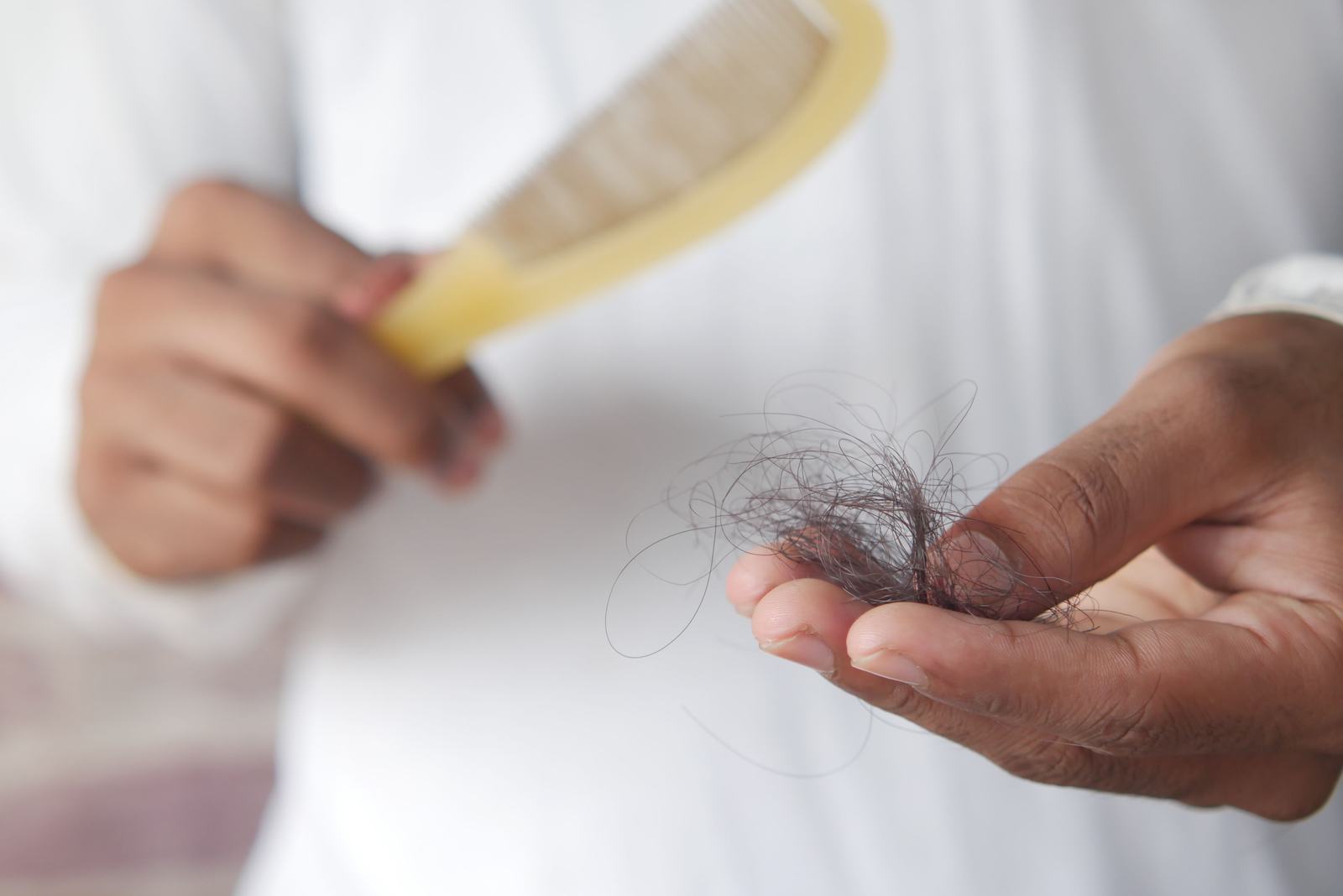
Yes, for the right person, at the right stage, with realistic expectations. That qualification is not hedging. It is the entire answer.
PRP has been used in medicine for decades, in orthopedics and dentistry long before anyone applied it to scalps. Its use for hair loss is newer, and the evidence has been genuinely mixed, with early reviews concluding there was not enough support and more recent analyses reaching more favorable conclusions.
Here is what the research actually shows, who responds, and the point at which it stops being worth your money.
The Short Answer
- PRP uses your own concentrated platelets, injected into the scalp, to stimulate existing follicles.
- Multiple systematic reviews report increased hair density compared with placebo.
- It works on thinning, miniaturizing follicles. It cannot revive follicles that are gone.
- Earlier treatment produces better outcomes. This is a treatment that rewards not waiting.
- It requires an initial series plus ongoing maintenance. Stopping means losing ground.
How It Works
Blood is drawn from your arm, spun in a centrifuge to concentrate the platelets, and the resulting plasma is injected across the thinning areas of the scalp in a grid pattern.
Platelets carry growth factors, the signaling proteins your body uses to coordinate tissue repair. The working theory is that delivering a high concentration of these directly to the follicle improves local blood supply, extends the active growing phase of the hair cycle, and encourages miniaturizing follicles to produce thicker, healthier hairs again.
The critical word is existing. PRP stimulates follicles that are still alive but underperforming. It does not create new follicles and it does not resurrect ones that have already scarred over and closed. This single fact explains almost every disappointing outcome.
What the Research Says
The evidence has evolved, and it is worth understanding the trajectory rather than cherry picking a single study.
A systematic review published in 2019 concluded there was insufficient evidence to support PRP for androgenetic alopecia. That is a real finding and it is frequently quoted by skeptics. Since then the volume of research has grown considerably.
A systematic review and meta-analysis of randomized controlled trials found that PRP increased hair density at three and six months with statistically significant differences compared with placebo. A separate comprehensive review and meta-analysis focused on female pattern hair loss examined dozens of studies covering more than fifteen hundred cases and described PRP as a promising non surgical option.
The honest caveats: study protocols vary widely in preparation method, injection technique, session number and spacing, which makes direct comparison difficult and is part of why results differ between clinics. Sample sizes are often modest. This is a treatment with meaningful supporting evidence, not one with the depth of evidence behind long established medications.
Who Responds Best
Candidacy is the single strongest predictor of whether you will be satisfied.
Best candidates: people in the earlier stages of pattern hair loss, where thinning and reduced density are visible but the scalp is not bare. Widening parts, a receding temple area with hair still present, and diffuse thinning across the crown are the classic responsive presentations. Younger patients and those whose loss has been progressing recently rather than for decades tend to do better.
Poor candidates: anyone with completely bald areas where follicles have long since closed. No amount of stimulation revives what is no longer there. If you can see smooth, shiny scalp with no fine hairs at all, that region will not respond, and a clinic that takes your money for it anyway is not being straight with you.
PRP is also used for other forms of hair loss, including certain autoimmune and stress related shedding, though the evidence base is strongest for pattern hair loss.
The Treatment Schedule
This is where people underestimate the commitment, and where most disappointment originates.
A typical initial course runs three to four sessions spaced roughly four to six weeks apart. Maintenance then continues every four to six months indefinitely. PRP does not stop the underlying process driving your hair loss, it counteracts it, so when treatment stops the original process resumes.
Timelines require patience because hair grows slowly. Expect reduced shedding as the first sign, often within two to three months. Visible thickening generally appears around three to six months, and the fullest result somewhere around six to twelve months. Anyone promising visible change in weeks does not understand the hair cycle.
Photographs under consistent lighting are essential. Hair changes too gradually to assess reliably from memory, and standardized before and after images are the only fair way to judge whether it is working for you.
Why Results Vary So Much Between Clinics
If you have read wildly different accounts of PRP, from life changing to complete waste of money, this section explains most of the gap.
There is no single standardized PRP protocol. Clinics differ in the type of centrifuge and tube system used, the spin speed and duration, and therefore the final platelet concentration in what actually gets injected. A preparation with a low platelet concentration is a fundamentally weaker treatment than a well concentrated one, and the patient cannot tell the difference by looking at it.
Injection technique varies too. Depth matters, since the growth factors need to reach the level of the follicle rather than sitting too superficially. So does the density and pattern of the injection grid across the treatment area.
Then there is the number and spacing of sessions. A clinic selling a single session as a meaningful treatment is setting up a poor result, because the research showing benefit is based on courses of treatment rather than one visit.
Reasonable questions to ask: how do you prepare the PRP, how many sessions do you recommend and why, and can I see standardized before and after photographs of your own patients at six months. A clinic that answers all three comfortably is a different proposition from one that does not.
What the Appointment Is Like
Expect around forty five minutes to an hour. Blood is drawn from your arm as it would be for any routine test, then spun while your scalp is cleaned and prepared.
The injections are the part people ask about. The scalp is sensitive, and while the needles are very fine, most people describe the sensation as a series of stings or pressure. Numbing options are usually available, and many find it more tolerable than anticipated. It takes roughly fifteen to twenty minutes.
Afterward the scalp is often tender, sometimes slightly swollen, occasionally with minor bruising, and this settles within a day or two. Wash your hair normally the following day, skip harsh chemical treatments for a couple of days, and avoid strenuous exercise, saunas and swimming for about forty eight hours.
PRP Compared to the Alternatives
It helps to see where PRP sits among the options rather than considering it in isolation.
Topical and oral medications for pattern hair loss are the long established first line, with the deepest evidence behind them. They require daily consistency indefinitely, and each has its own side effect profile worth discussing with a provider. Many people use them alongside PRP rather than instead of it, since the mechanisms differ.
Hair transplant surgery moves follicles from an area that is not thinning to one that is. It is the only option that puts hair where there is currently none, which makes it the appropriate answer for genuinely bald areas that PRP cannot address. It is also a surgical procedure with a corresponding cost and recovery. PRP is sometimes used alongside a transplant to support healing and the surrounding native hair.
Low level laser devices are the gentlest option and require very consistent home use, with more modest results.
PRP occupies a useful middle position: more involved than a topical treatment, considerably less than surgery, and best suited to preserving and thickening what you still have. Framed that way, its role becomes clear. It is a preservation and improvement treatment, not a replacement one.
PRP as Part of a Plan, Not the Whole Plan
The strongest results come from combining approaches rather than relying on PRP alone. Established medical treatments for pattern hair loss work through different mechanisms, and using them alongside PRP is common and sensible.
It is also worth investigating what is driving your loss. Thyroid dysfunction, iron deficiency, significant nutritional gaps and hormonal changes all contribute to hair loss and all are treatable. Injecting a scalp while an untreated iron deficiency continues is fighting uphill for no reason. A thorough assessment should include appropriate blood work rather than proceeding straight to treatment.
Our approach to hair restoration in Peculiar starts by establishing what stage of loss you are actually in and whether anything treatable is contributing, because that determines whether PRP is a sensible investment for you or not. We see patients from Raymore, Belton, Harrisonville and across the south Kansas City metro. If you want an honest read on whether you are still within the window where this works well, get in touch.