No. Dermaplaning removes dead skin and fine peach fuzz at the surface, so it does not change the follicle that controls how hair grows. New hair can feel coarser for a few days because the blade leaves a blunt tip, but the tip tapers and softens again as the hair grows in.
Does dermaplaning make hair grow back thicker? It is the question almost everyone asks before a first appointment, usually with one hand on their cheek.
The worry is easy to picture. A blade passes over your face, the fuzz disappears, and a few days later something stubbly comes back. It feels like proof that the hair returned different. It is not, and the real explanation is more interesting than a one line myth buster.
Below you will find what happens to peach fuzz after dermaplaning, why regrowth can feel coarser for a few days, who should skip the treatment or check with a provider first, and a short fit check to help you decide whether it makes sense for your skin right now.
Does Dermaplaning Make Hair Grow Back Thicker? What Happens to the Hair
No. Dermaplaning does not change how your hair grows, because it only removes hair above the surface of the skin. Dermatologist Melissa Piliang, MD, explains in a Cleveland Clinic health article that trimming hair above the surface of the skin has no effect on how it grows. The article adds that a haircut does not make the hair on your head grow faster, thicker or darker, and neither does dermaplaning.
The hair in question is vellus hair, the light, soft "peach fuzz" on your face. Dermaplaning lifts it off along with the top layer of dead skin. The follicle below the surface, where growth is decided, is not part of the treatment. Our own dermaplaning page says the same: cutting the fuzz does not change the follicle, so it returns at the same fine texture and color on its normal cycle.
Why New Hair Can Feel Coarser After Dermaplaning
New hair can feel coarser because a blade cuts it straight across and leaves a blunt tip instead of the fine, tapered end it had before. Dr. Piliang explains that hair narrows and tapers at the end as it grows, which is what makes it feel soft. Hair that has just been cut bluntly can feel a little thicker and coarser for that reason alone. As the new hair grows, its tip tapers and softens again.
It can also be a matter of contrast. Against skin that was just made smooth, any returning hair is easier to notice and easier to feel. You are touching a freshly cut edge on hair you had stopped noticing years ago. The hair itself has not changed.
The hair is the same. Only the tip changes, and it changes back.
What Dermaplaning Actually Does for Your Skin
Dermaplaning is a minimally invasive procedure that shaves away the top layers of your skin. Cleveland Clinic says it can help minimize the appearance of acne scars, fine lines, wrinkles and dull skin by revealing newer skin, and notes that it does not stop the aging process. It also lists hair removal as a reason some people book it, with an important caveat: that part is only a temporary fix, because the hair grows back.
Who Is Dermaplaning Usually For?
People usually consider dermaplaning for dull or dry skin, peach fuzz, fine lines, skin that has been damaged by the sun, and the look of acne scars. Cleveland Clinic lists those among the concerns it may address, and it is worth reading that as a menu of possibilities, not promises. Results vary from person to person, and dermaplaning works on the top layers of skin, so deeper texture or loose skin may call for a different tool. Our guides to PRF vs PRP microneedling and Scarlet RF vs microneedling cover what those options add.
It also helps to know how it differs from a chemical peel. Dermaplaning removes dead skin physically, with a blade, while a peel does it with acids. Dermaplaning also takes off the fine facial hair, which a peel does not, and on our dermaplaning page the practical difference is downtime: a peel usually means visible flaking for several days, while light dermaplaning has none.
What Happens at a Dermaplaning Appointment
A good appointment starts with questions, not the blade. Cleveland Clinic says that before the procedure your provider will discuss your goals, examine your skin to make sure it is healthy enough, review your health history and explain what to expect before, during and after. Some providers also take photos so you can compare results later.
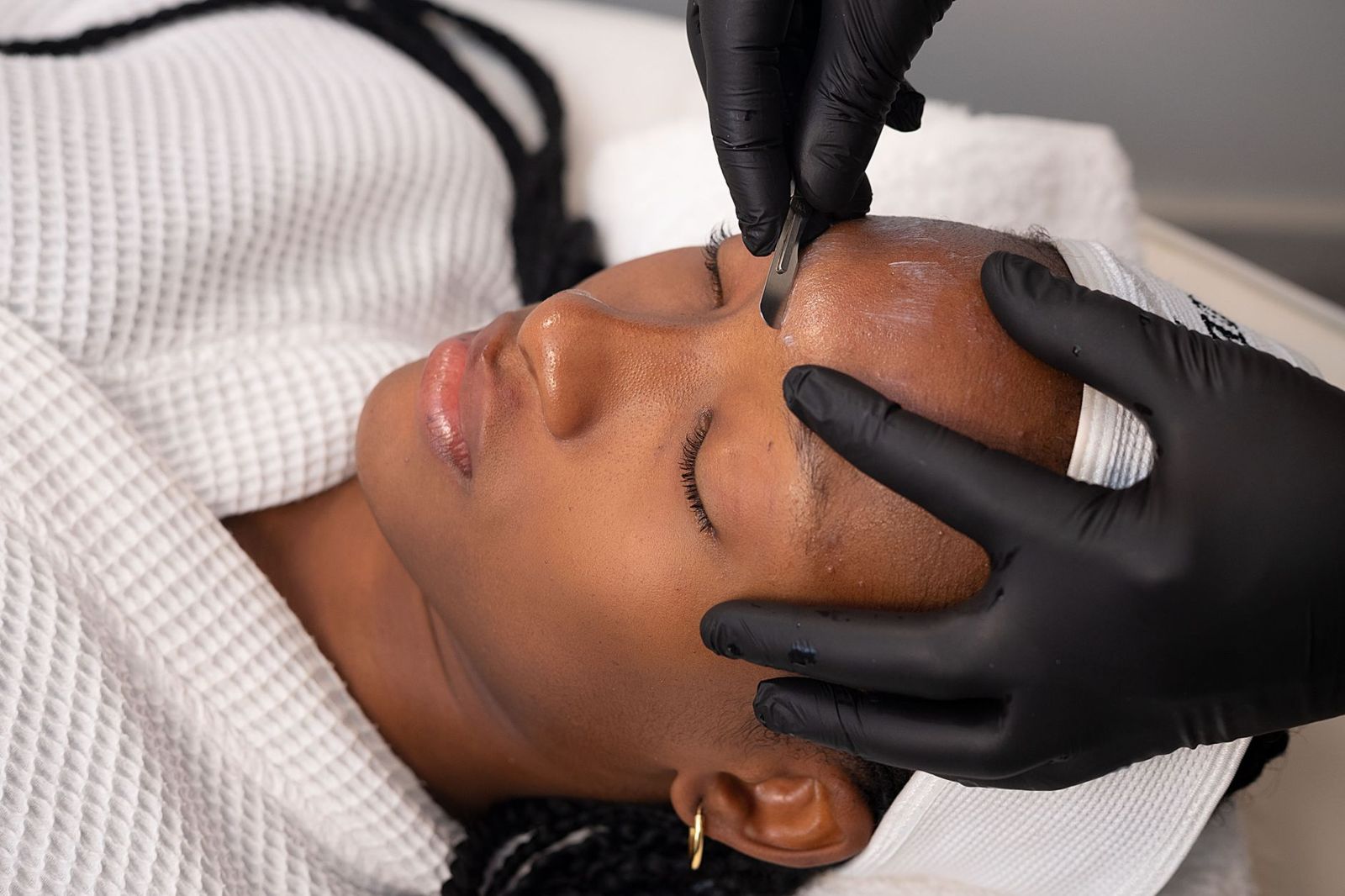
At Hideaway, the aesthetician then cleanses your skin, holds a section taut and moves a sterile surgical blade across it at a shallow angle in short, light strokes. Most guests describe a light scraping sensation that is closer to ticklish than uncomfortable. The visit finishes with a hydrating serum and sunscreen, because freshly exfoliated skin is more sensitive to sun for a few days. Many guests pair it with a medical facial or an AquaFacial so the two work together in a single appointment.
Techniques and depth vary from one provider to the next, and Cleveland Clinic describes the procedure in its medical setting, where recovery is more involved than a light exfoliating pass. So ask exactly what your appointment includes and what recovery to expect. The light dermaplaning we offer has no downtime.
Dermaplaning Myths and Facts
Most of the confusion comes from four myths. Here they are next to what the sources actually say.
The hair grows back thicker and darker.
Cutting hair above the surface does not change how it grows. A blunt tip can feel coarser for a while, then it tapers again.
It permanently removes facial hair.
Cleveland Clinic calls hair removal by dermaplaning a temporary fix, because the hair grows back.
It is fine for every skin on every day.
Active acne, cold sores, eczema, psoriasis, rashes, burns and some skin growths are reasons to talk to a provider first.
More often is better.
Skin has to heal fully between treatments, and Dr. Piliang advises against doing it at home more than once a week.
Who Should Skip Dermaplaning or Check First
Anyone with an active skin condition should check with a provider before dermaplaning, and some people should simply wait. Cleveland Clinic advises talking to your healthcare provider first if you have any of these:
- An active case of acne
- Cold sore outbreaks
- Eczema or psoriasis
- Skin rashes, such as contact dermatitis
- Skin burns, such as those from radiation therapy
- Moles, freckles, skin tags or other skin growths in the area
It also names the risks to know about: infection, scarring and skin discoloration, along with redness, swelling and tenderness afterward. Cleveland Clinic still describes dermaplaning as generally considered a safe cosmetic procedure, which is exactly why the screening step matters. On our dermaplaning page we say that we look at your skin before we start, and that if it is not the right day we will say so and reschedule you.
A Quick Fit Check: Is Dermaplaning Right for You Right Now?
Answer three short questions and the tool below will give you an honest read, including when the best choice is to wait or to skip dermaplaning altogether. Nothing you select is saved or sent anywhere.
Is dermaplaning a fit right now?
Question 1 of 3
Dermaplaning at Home or With a Provider?
You can dermaplane at home, but a provider adds screening and technique. Dr. Piliang calls the at-home version generally safe, effective and low-risk, and then lists what to watch. It lightly disrupts the skin barrier, so skin may feel irritated for a day or so. A nick can lead to infection. It can agitate existing acne. And it is best skipped during an eczema flare or any other active skin issue. She advises no more than once a week at home, and adds that most peach fuzz is so fine that when it grows in you may not even see it.
According to the same article, professional dermaplaning is performed by doctors, aestheticians and other trained specialists skilled in skin resurfacing. Whoever you choose, ask who will hold the blade and what their training is. Our guide on how to choose a med spa lists the questions worth asking.
How Often Should You Dermaplane?
There is no single schedule, because the skin has to heal fully between treatments and your provider should confirm what is safe for you. At home, the Cleveland Clinic dermatologist recommends no more than once a week. In the treatment room, our dermaplaning page suggests that every three to four weeks suits most guests. If you are building a routine, our guide on how often to get a facial explains how to set the pace for your skin.
What Aftercare Looks Like
Aftercare is simple: moisturize, wear sunscreen, and go gently. Dr. Piliang says skin may feel a little irritated for a day or so, so moisturize well and keep wearing sunscreen. At Hideaway we finish with a hydrating serum and sunscreen, ask guests to wear sunscreen daily, and suggest skipping strong acids for about two days afterward.
- Dermaplaning does not make hair grow back thicker or darker.
- A blunt cut tip can feel coarser for a while, then it tapers and softens.
- Hair removal from dermaplaning is temporary.
- Active acne, cold sores, eczema, psoriasis, rashes, burns and skin growths are reasons to check with a provider first.
- Skipping it is a perfectly good choice if peach fuzz is your only reason.