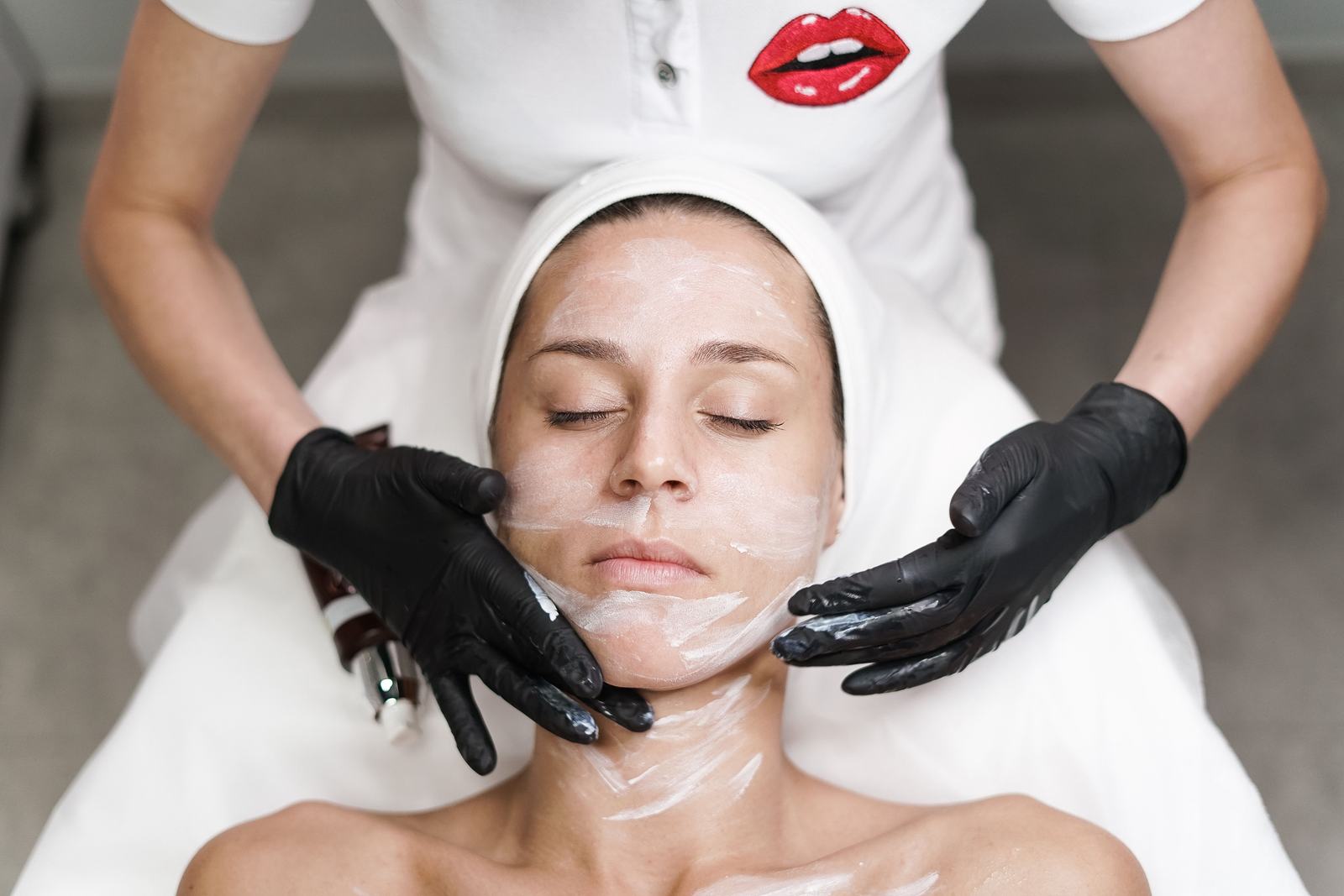
Every four to six weeks. That is the answer, and unlike a lot of skincare advice, it is based on something real.
Your skin runs a renewal cycle. New cells form in the deeper layer, migrate upward, flatten, and eventually shed from the surface. In a young adult that round trip takes roughly four weeks. By your forties and beyond it slows considerably, sometimes stretching well past six.
Timing professional treatment to that cycle means you are always working on freshly surfaced skin rather than interrupting a cycle midway. Here is how to adjust the standard interval for your skin, your age, and what you are actually trying to fix.
The Short Answer
- Every four to six weeks suits most people for general maintenance.
- Active acne often warrants every two to four weeks at first, then spacing out.
- Mature or slower-turnover skin frequently does better at every four to six weeks, consistently.
- Sensitive or reactive skin usually needs six to eight weeks and gentler protocols.
- Consistency beats intensity. Six gentle facials a year outperform one aggressive one.
Why Four to Six Weeks
Treat too often and you interrupt the skin barrier's recovery. The barrier is the outermost defense that holds moisture in and irritants out, and repeatedly stripping it produces exactly the problems people book facials to solve: redness, sensitivity, tightness, breakouts, and skin that stings when products are applied.
Treat too rarely and you never build momentum. A single facial gives you a genuinely lovely week and then your skin returns to whatever your daily routine supports. Congestion re-accumulates, dead cells build back up, and you start from scratch next time.
The four to six week window sits in between: frequent enough to compound, spaced enough to let the barrier fully recover. The American Academy of Dermatology's guidance on basic skin care makes a related point about daily habits, which is that gentleness and consistency matter more than aggressive intervention.
Adjusting for Your Skin
| Skin type or goal | Typical frequency | Why |
|---|---|---|
| General maintenance | Every 4 to 6 weeks | Matches the natural renewal cycle for most adults |
| Active acne or congestion | Every 2 to 4 weeks initially | Clearing established congestion takes repetition, then intervals lengthen |
| Oily, thicker skin | Every 3 to 4 weeks | Faster oil production and more frequent congestion |
| Dry or dehydrated | Every 4 to 6 weeks | Focus shifts to barrier support and hydration rather than deep cleansing |
| Sensitive or reactive | Every 6 to 8 weeks | Needs longer recovery and gentler protocols to avoid flaring |
| Mature skin, anti-aging focus | Every 4 to 6 weeks | Slower cell turnover benefits from consistent stimulation |
| Before a big event | 2 to 3 weeks prior | Leaves room for any purging or redness to fully settle |
Age Changes the Answer
In your twenties, facials are mostly about control and prevention: managing oil and congestion, establishing habits, and protecting the collagen you still have. Many people in this group do well on the longer end of the range unless they are actively treating breakouts.
In your thirties, turnover begins slowing and the first fine lines and uneven tone appear. This is the decade where consistency starts paying visible dividends, and where treatments that stimulate rather than merely cleanse become more valuable.
From your forties onward, cell turnover has slowed meaningfully and skin holds less water. Regular professional exfoliation and stimulation do more work here than they did at twenty five, and consistency matters more than ever. Skipping to twice a year rarely maintains progress.
What Actually Happens Between Appointments
Here is the part most people underestimate. A facial is roughly one hour every month or so. Your daily routine is the other seven hundred and some hours. The professional treatment accelerates and amplifies, but it cannot outrun what happens at home.
The non-negotiables between visits are unglamorous and effective: daily broad spectrum sunscreen, a gentle cleanser that does not leave skin squeaking, consistent moisturizing, and whatever active ingredients your esthetician has matched to your concerns. Sunscreen in particular does more for how your skin looks in five years than any single treatment you can book.
If you take one thing from a facial, it should be the plan your esthetician gives you for what to do between them. That is where most of the result actually lives.
The Type of Facial Changes the Interval
"Facial" covers a wide range, and the right frequency depends heavily on how much the treatment asks of your skin.
A classic cleansing and hydrating facial is gentle. It cleanses, exfoliates lightly, extracts congestion, and finishes with a mask and moisture. Because it does not deeply disrupt the barrier, it fits comfortably into a four week rhythm for most skin types and is the usual backbone of a maintenance schedule.
Treatments built around stronger chemical exfoliation are a different matter. They deliberately accelerate shedding, and the skin needs time to complete that process and rebuild before being asked again. Spacing them further apart is not caution, it is how they are designed to work.
Device based treatments such as microneedling or radiofrequency sit further along the same spectrum. They create a controlled healing response, and collagen remodeling continues for weeks after the appointment. Booking those on a monthly facial rhythm would interrupt the very process you paid for. Many people run a sensible hybrid: gentler facials for regular maintenance, with a stimulating treatment layered in a few times a year.
The practical takeaway is to ask what a given treatment actually does to the skin, then let that dictate the gap. Anyone who recommends the same interval regardless of treatment type is not really tailoring anything.
Adjusting Through the Seasons
Skin is not static across the year, and a schedule that ignores that is leaving results on the table.
Through a Missouri winter, indoor heating and cold air strip moisture, and barrier support becomes the priority. This is the season for hydrating, calming protocols, and often for keeping the interval consistent so the skin never gets far behind.
Summer flips the emphasis toward oil control, sweat and congestion, and sun exposure changes what is safe to do. Strong exfoliation on skin that is getting significant sun is a route to irritation and pigmentation, which is why many stronger treatments are scheduled for the cooler months. If you are outdoors a lot, expect protocols to be adjusted rather than assuming your usual treatment is always appropriate.
Signs You Are Going Too Often
More is not better, and over-treatment is common in people who are highly motivated.
Watch for skin that has become persistently red or flushed, stinging when you apply products that never used to sting, unusual tightness or a feeling of thinness, increased sensitivity to sun, or a sudden run of breakouts in someone who does not usually get them. All of these point to a compromised barrier.
The fix is not another treatment. It is backing off, simplifying your routine to a gentle cleanser and a good moisturizer for a few weeks, and letting the barrier rebuild. A good esthetician will tell you to do exactly that, even though it means not booking you.
Signs You Are Not Going Often Enough
The pattern is easy to spot in hindsight. Your skin looks wonderful for about a week after each facial, then steadily declines back to baseline. Congestion returns to the same areas every time. You feel like you are restarting at every appointment rather than continuing from where you left off. Progress never accumulates.
If that is your experience, the answer is usually a tighter interval and a stronger home routine rather than a more aggressive treatment. Building a result is a matter of repetition, not intensity.
There is a related trap worth naming. People who only book a facial when their skin is already in trouble are always treating a problem instead of preventing one, which makes every appointment feel like damage control. Shifting to a scheduled rhythm, even a relaxed one, changes the job of the appointment from rescue to maintenance, and maintenance is both cheaper and more comfortable than rescue.
Building a Realistic Schedule
Be honest about budget and time, and then choose consistency over ambition. Someone who commits to a facial every six weeks and follows a simple home routine will comfortably out-result someone who books an expensive intensive treatment twice a year and does nothing in between.
A sensible way to start is a course of three treatments about four weeks apart to establish a baseline and address your primary concern, then settling into maintenance at four to six week intervals with the protocol adjusted as your skin changes with the season.
Our facials in Peculiar begin with a proper skin assessment rather than a menu, because the right treatment and the right interval depend entirely on what your skin is doing right now. If you would rather ask a few questions before booking anything, get in touch and we will give you a straight answer, including when the honest recommendation is to wait.