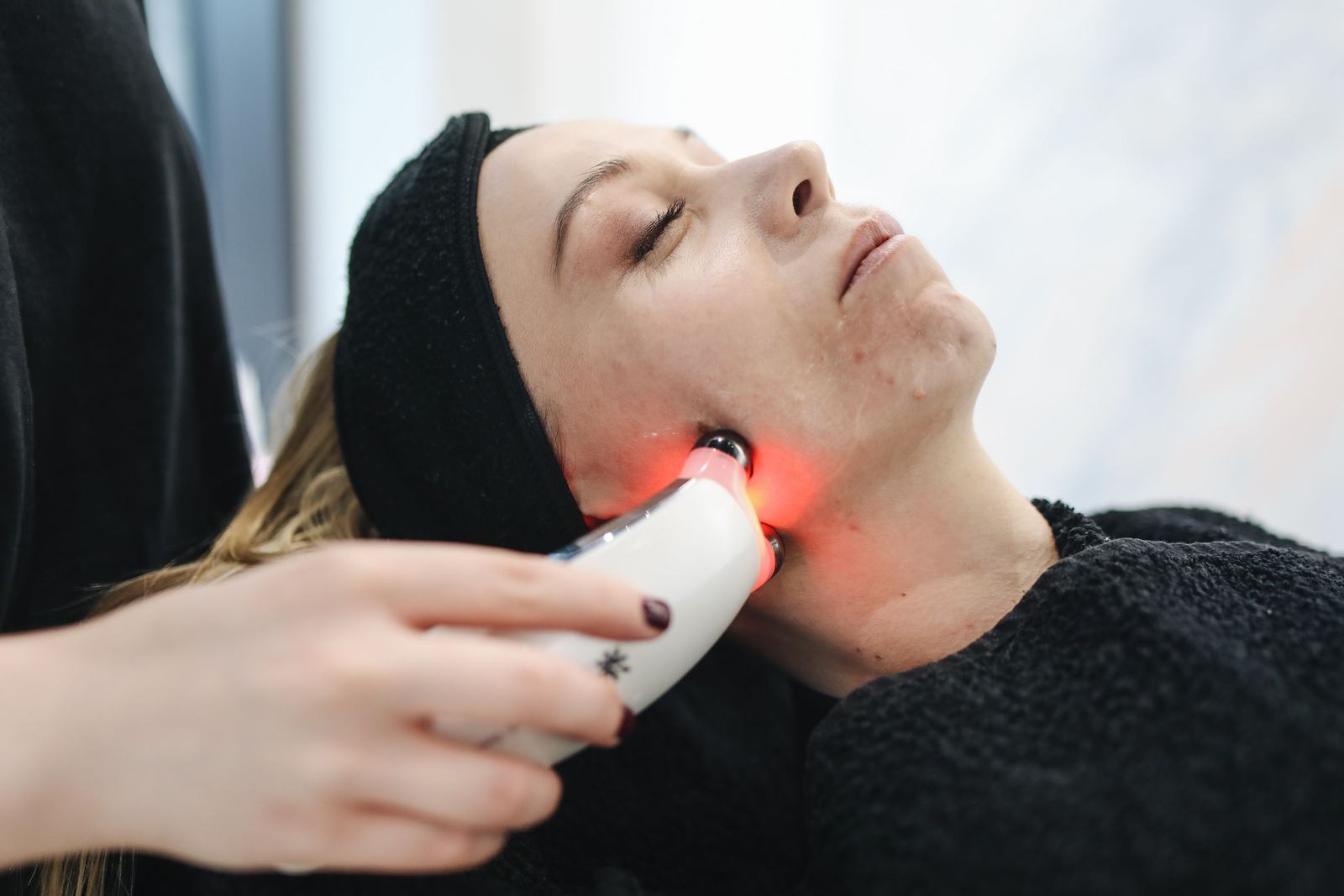
Same needles. Very different job.
Traditional microneedling and radiofrequency microneedling look almost identical from the outside, and clinics often present them as tiers of the same thing, with the more expensive option implied to be simply better. That framing is misleading.
They solve different problems. Choosing between them correctly saves you a course of treatments aimed at the wrong concern. Here is exactly what the radiofrequency component adds, and how to tell which one you need.
The Short Answer
- Traditional microneedling creates mechanical micro injuries that trigger collagen production.
- Scarlet RF adds radiofrequency energy delivered through the needle tips, heating the deeper layers.
- Mechanical needling excels at texture, tone, pores and superficial scarring.
- Radiofrequency adds genuine tightening, which needling alone does not deliver.
- RF treatments generally need fewer sessions for equivalent structural change.
How Traditional Microneedling Works
Fine needles create thousands of controlled micro channels in the skin. Your body reads these as injuries and mounts a repair response, producing fresh collagen and elastin. Repeated over a series of sessions, that response improves the surface of the skin: smoother texture, refined pores, softened fine lines, and meaningful improvement in acne scarring.
It is a well established, versatile treatment with a straightforward recovery, and for a great many concerns it is entirely sufficient. What it does not do particularly well is tighten. The stimulation is concentrated in the upper layers of the skin, and lifting genuinely lax tissue requires reaching deeper than needles alone comfortably go.
What the Radiofrequency Adds
Scarlet RF and similar systems use insulated needles that deliver radiofrequency energy from their tips once they are at depth. The needles create the same mechanical channels, then the energy heats the tissue around each tip.
That heat matters. Controlled thermal energy in the deeper dermis causes existing collagen fibers to contract immediately, and it triggers a more substantial wound healing response than mechanical injury alone. Over the following weeks the body lays down new collagen and remodels the existing scaffold. The result is tightening and firmness rather than just surface refinement.
Because the energy is delivered from insulated tips at a set depth, the surface of the skin is comparatively spared while the deeper layer does the work. That is what allows meaningful thermal treatment without the recovery you would expect from an aggressive resurfacing procedure.
Head to Head
| Factor | Scarlet RF | Traditional microneedling |
|---|---|---|
| Mechanism | Micro injury plus radiofrequency heat at depth | Mechanical micro injury only |
| Depth of effect | Deeper dermis | Mainly upper layers |
| Skin tightening | Yes, a primary benefit | Limited |
| Texture and pores | Yes | Yes, a core strength |
| Typical course | 2 to 3 sessions | 4 to 6 sessions |
| Downtime | 1 to 3 days, sometimes mild swelling | 1 to 2 days of redness |
| Best for | Laxity, jawline and neck softening, deeper wrinkles, acne scarring | Texture, pores, tone, fine lines, superficial scarring |
How to Tell Which One You Need
Do this in a mirror, in natural light. Look straight ahead, then tilt your chin down toward your chest and look at yourself again.
If the second view bothers you far more than the first, particularly along the jawline and under the chin, your concern is laxity. Gravity is revealing tissue that has lost its structural support, and no amount of surface refinement will change it. That is a radiofrequency conversation.
If both views look broadly similar and what bothers you is the quality of the surface, enlarged pores, uneven texture, dullness, fine crepey lines or scarring, that is traditional microneedling territory, and you may not need to spend more.
Age is a rough guide rather than a rule. People in their twenties and thirties are more often treating texture and scarring. From the forties onward, collagen decline means laxity increasingly becomes the dominant concern. But plenty of people in their thirties have early jawline softening, and plenty in their fifties are mainly bothered by texture.
Where Each One Wins on Specific Concerns
It helps to move past the general comparison and look at the concerns people actually book for.
Acne scarring. Both help, and this is one area where radiofrequency has a genuine edge on deeper, more tethered scars, because reaching the lower dermis is what releases and remodels that tissue. Shallow, textural scarring often responds perfectly well to mechanical needling alone, so the depth of your scarring should drive the choice.
Enlarged pores and rough texture. Traditional microneedling is excellent here and frequently all that is needed. Paying for radiofrequency to treat pores alone is spending on capability you are not using.
Jawline and neck softening. Radiofrequency, without much debate. This is the concern that mechanical needling simply is not built to address, and the most common reason people who tried microneedling felt underwhelmed.
Fine lines around the eyes and mouth. Both can help, though radiofrequency tends to do more for the crepey laxity that often accompanies those lines. Bear in mind that lines caused by muscle movement belong to a neuromodulator rather than to either device.
Overall dullness and tone. Either will improve this, and here the cheaper option is usually the sensible one.
What Neither One Will Do
This is where honest expectation setting saves disappointment.
Neither treatment replaces surgery. Radiofrequency microneedling produces genuine tightening, but it works on skin quality and moderate laxity. If there is significant excess skin or the underlying support has descended substantially, a device will not deliver what a surgical lift delivers, and any clinic implying otherwise is overselling. Knowing where that line falls is part of a competent consultation.
Neither treatment reliably corrects pigmentation or redness. Some improvement in overall tone is common, but melasma in particular can be aggravated by heat, and it needs its own approach. The American Academy of Dermatology's overview of wrinkle treatments is a useful grounding on what the different categories of procedure realistically achieve.
And neither works as a one off. Both build results over weeks through collagen remodeling, and both need a course.
The Appointment and Recovery
Both treatments start with numbing cream, which needs a solid thirty minutes to work properly. With radiofrequency you will feel warmth alongside the needling sensation, and most people describe it as very tolerable rather than painful.
Afterward, expect redness resembling a sunburn. With radiofrequency there is more often some swelling for a day or two, particularly around the eyes and jaw, and the skin can feel warm and tight into the following day. A grid pattern of tiny marks is sometimes visible for a day or so. Most people return to normal activity the next day and are comfortable in makeup within about forty eight hours.
Aftercare is the same in both cases. Nothing on the skin but what your provider supplies for the first day, no makeup for the rest of the treatment day, no gym, sauna, hot shower or swimming for about forty eight hours, no active ingredients for several days, and rigorous sun protection.
Who Should Postpone Either Treatment
Both treatments break the skin surface, so the same list of cautions applies to each. Active acne breakouts, cold sores, eczema or any infection in the treatment area mean rescheduling rather than proceeding. Pregnancy and breastfeeding rule both out. A history of keloid scarring, recent isotretinoin use, and certain autoimmune conditions all warrant a proper conversation first.
Radiofrequency adds one consideration of its own. Because it delivers energy into the tissue, anyone with an implanted electronic device such as a pacemaker needs clearance, and metal implants in the treatment area have to be discussed. A competent consultation asks about all of this before booking rather than on the day.
Results and Timeline
You will see an early glow within a week as swelling settles. The tightening from radiofrequency arrives more gradually, becoming noticeable around six to eight weeks and continuing to improve for three to six months as collagen remodels. That slow build is why sessions are spaced four to six weeks apart and why judging the outcome early is unfair to the treatment.
Because the change is gradual, take a photograph in consistent lighting without makeup before you begin and before each subsequent session. Tightening that develops over three months is very easy to underestimate from memory alone, and the comparison photo is often what convinces people the course was worth completing.
Maintenance typically means a single session once or twice a year once the initial course is complete, and results hold better alongside daily sun protection, since ultraviolet exposure degrades the collagen you just paid to build.
If you are unsure which category your concern falls into, that is exactly what an assessment is for. We offer both Scarlet RF and PRF microneedling at our Peculiar studio, and we would rather put you in the less expensive treatment that fits than sell you the more expensive one that does not. Patients come to us from Raymore, Belton, Harrisonville and across the south Kansas City metro. Book a consultation and we will give you a straight answer.